How AI starts to connect supply chain data that has lived in pieces for twenty years
Seven ways AI is reshaping supply chain reporting — from rigid cubes and reason codes to a data layer any planner can simply ask in plain language.

Seven ways AI is reshaping supply chain reporting — from rigid cubes and reason codes to a data layer any planner can simply ask in plain language.
Preparing any SCM analysis for internal management review, a serious customer or supplier negotiation in a manufacturer usually goes the same way. Collecting bits & pieces from different data source; OTIF from one cube. Ordering lead times from another. Truck fulfillment from a third. Invoicing from finance. Modification patterns — if you can get them — from a change log export. And so on. Then a day or two stitching it together.
Everyone in supply chain knows this. The interesting question isn't what's broken; it's what changes now that AI can sit across the pieces and connect them. We see the shift is happening in seven specific places.
Cubes were built years ago to answer specific questions for specific groups. They are locked at their original aggregation level — ship-to, invoiced orders, whatever the original brief was — and refused every adjacent question after that. The definitions behind them faded out of memory as the people who specified them moved on.
What changes: a model that can read across the underlying records, not just the cube outputs, can answer the questions the cube was never built for. The shape of the analysis stops being decided years in advance by IT scoping. The same data supports drill-downs the cube refused, and the definitions can be re-stated explicitly when the question is asked rather than being inherited as folklore.
When an order misses OTIF, someone picks the closest available reason code from a fixed list and assigns responsibility. The codes are finite, the actual cause rarely fits one cleanly, and the aggregated report treats those approximations as ground truth. Reviewing a monthly OTIF means reading an interpretation of an interpretation.
What changes: language models can read the unstructured context around a miss — the email thread, the order notes, the modification history — and either propose a better-fitting reason code at the moment of entry or hold the qualitative context alongside the code so the aggregated view doesn't have to flatten it.
The order hit or it was missed. There was never a field for "delivered against three last-minute modifications and a raw material delay we worked around." A turbulent month and a calm one produce comparable OTIF numbers. The recovery is invisible.
What changes: the same model that connects across records can describe the conditions a result was produced under. The numerical KPI stays, but it sits next to a characterization of the operating environment — how much modification, how much disruption, how much recovery effort. Comparing a 92% OTIF against a chaotic month and a 92% OTIF against a stable one becomes a different conversation.
In SAP and comparable ERPs, an order's life is a chain — sales order, shipment, invoice, the upstream raw material dependencies. The system stores the chain. The reporting layer slices the other way, by document type, and the end-to-end story of a single order is something people build by hand for specific disputes after escalation forces the question.
This is where the change is most visible. A model that can traverse the linked records produces the per-order story on demand: entered when, modified how, shipped against which raw materials, invoiced in which period. The perfect order question — which most supply chain directors can't confidently answer today — becomes a query against the chain rather than a multi-week reconstruction project.
ERPs log every modification — quantity changed, date pushed, line added, contact swapped. The log extracts as a flat sequence that swamps any human trying to read it. And it records what changed, not why. The reason is supposed to be entered by the user; there's no time, so it usually isn't.
What changes: AI summarizes the log into the sequence of meaningful events for the order, in plain language. And capture at the point of change improves — when a modification is entered, the model can read the surrounding email or order context and propose the why the user would otherwise skip. The log starts holding intent, not just deltas.
In every company there are a few people who, over years, accumulated access to most of the reporting and the knowledge of which report answers which question. Every cross-functional analysis routes through one of them. Those people leave. The knowledge doesn't transfer cleanly. And everyone closer to the daily operations can't self-serve.
What changes: when the data layer is queryable in natural language, the people closest to the work — order management, planners, logistics coordinators — can ask their own questions instead of routing through the few interpreters. The senior people stop being the bottleneck for every analysis. The institutional knowledge that lived in their heads starts living in a layer everyone can reach.
The reports that combine OTIF, lead time, modification patterns, and freight cost into a single view refresh once a month when they are, because that's how long the assembly takes. They are frequently uncomplete due to different time stamps/date of reference. Data collection & aggregation is a time consuming process. Data interpretation requires skills and time investment. Decision are partially taken based on data, and often completed by guts, side conversations & business acuity.
What changes: when assembly is done by a model rather than by a team, the composite view is current. The monthly cycle stops being a constraint of architecture. The same numbers a director used to wait for four weeks are available on Tuesday morning when the supplier call needs them. Data interpretation is supported by the model and each questions can be quicker investigated till the data makes sense. Managers have more time taking decisions based on actual, understandable reports.
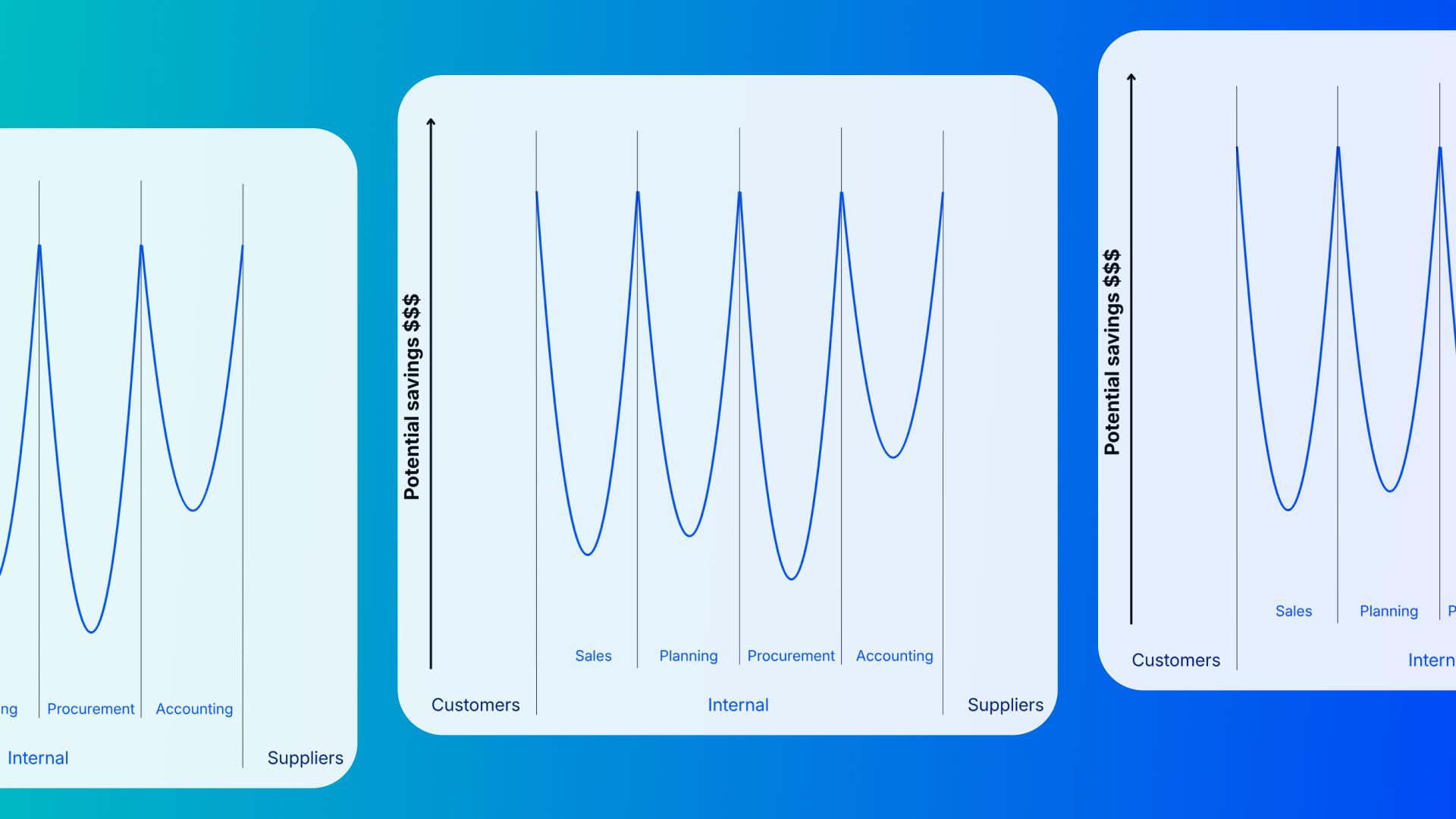
These aren't seven independent changes. They share one thing: AI lets the operating context that exists in the organization — in the documents, in the email threads, in the change logs, in the heads of the people who handled each case — be connected and queried in a form it never could be before. The reporting layer of the past twenty years summarized what each silo recorded about itself. What's becoming possible now is a layer underneath that holds the relationships across the silos, and an interface above it that any supply chain professional can use without going through IT.
Subscribe to our newsletter, and we will send AI automation insights like this straight to your inbox on a regular basis.